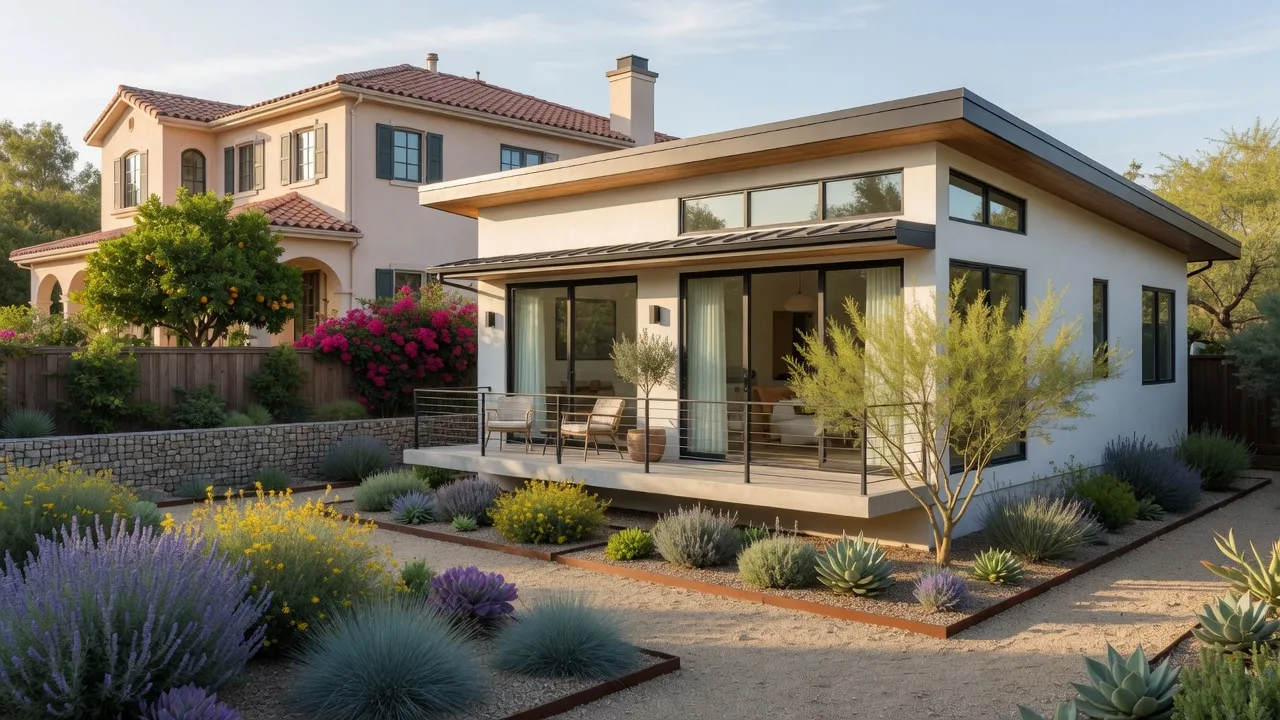
Accessory Dwelling Units, commonly known as ADUs, are one of the fastest-growing trends in California real estate. Whether you're a homeowner looking to add income to your property, a family wanting to create space for aging parents, or an investor eyeing new opportunities, ADUs offer a flexible and valuable solution. Here's what you need to know.
WHAT IS AN ADU?
An ADU is a secondary housing unit built on the same lot as an existing single-family home. ADUs come in several forms:
Detached ADU
A standalone structure separate from the main house, often built in the backyard.
Attached ADU
An addition that shares a wall with the existing home.
Garage Conversion
Transforming an existing garage into a livable living space.
Junior ADU (JADU)
A smaller unit (up to 500 square feet) created within the existing footprint of the home, such as converting a bedroom.
WHY ADUs ARE SO POPULAR IN CALIFORNIA
California's housing shortage has driven the state to pass some of the most ADU-friendly legislation in the country. Homeowners can now build ADUs with fewer restrictions, faster permitting, and reduced fees compared to just a few years ago. The key benefits include:
Additional Income Stream
Renting out an ADU can provide steady monthly income. In the Inland Empire and Greater Los Angeles area, ADU rental demand is strong, making this a smart financial move for property owners.
Housing for Family
Many homeowners use ADUs to house aging parents, adult children, or extended family members. It provides proximity and privacy at the same time — everyone gets their own space while staying close.
Increased Property Value
A well-built ADU can significantly increase the value of your property. Buyers recognize the potential for rental income or multi-generational living, making homes with ADUs highly desirable in the market.
Affordable Housing Solution
ADUs contribute to solving California's housing crisis by adding density in existing neighborhoods without changing the character of the community. They're smaller, more affordable to build than traditional homes, and they make efficient use of land that's already developed.
WHAT TO KNOW BEFORE BUILDING AN ADU
While California has made it easier to build ADUs, there are still important considerations:
Zoning & Permitting
Every city has its own ADU regulations. In Riverside, San Bernardino, and surrounding communities, rules vary on setback requirements, maximum size, parking, and owner-occupancy. Working with a knowledgeable local agent who understands your city's specific requirements is essential.
Costs
Building an ADU is a significant investment. Detached ADUs typically range from $150,000 to $350,000 or more depending on size, finishes, and site conditions. Garage conversions tend to be more affordable. It's important to budget realistically and plan for the full scope of work.
Financing
There are several financing options available for ADU construction, including HELOCs, construction loans, and California-specific programs like CalHFA's ADU Grant Program that can help cover pre-development costs.
Timeline
From planning to completion, building an ADU typically takes 12 to 18 months. Permits alone can take several months, so patience and planning are key.
SHOULD YOU BUILD AN ADU?
ADUs aren't the right move for every property, but for many homeowners in the Inland Empire and Southern California, they represent an excellent opportunity. Whether your goal is rental income, family housing, or increasing your property's value, an ADU can deliver real results.
Thinking about building an ADU or curious about how one could impact your property's value? Reach out for a free consultation. Experience matters, and having the right guidance from the start can save you time, money, and headaches down the road. Who you hire matters.