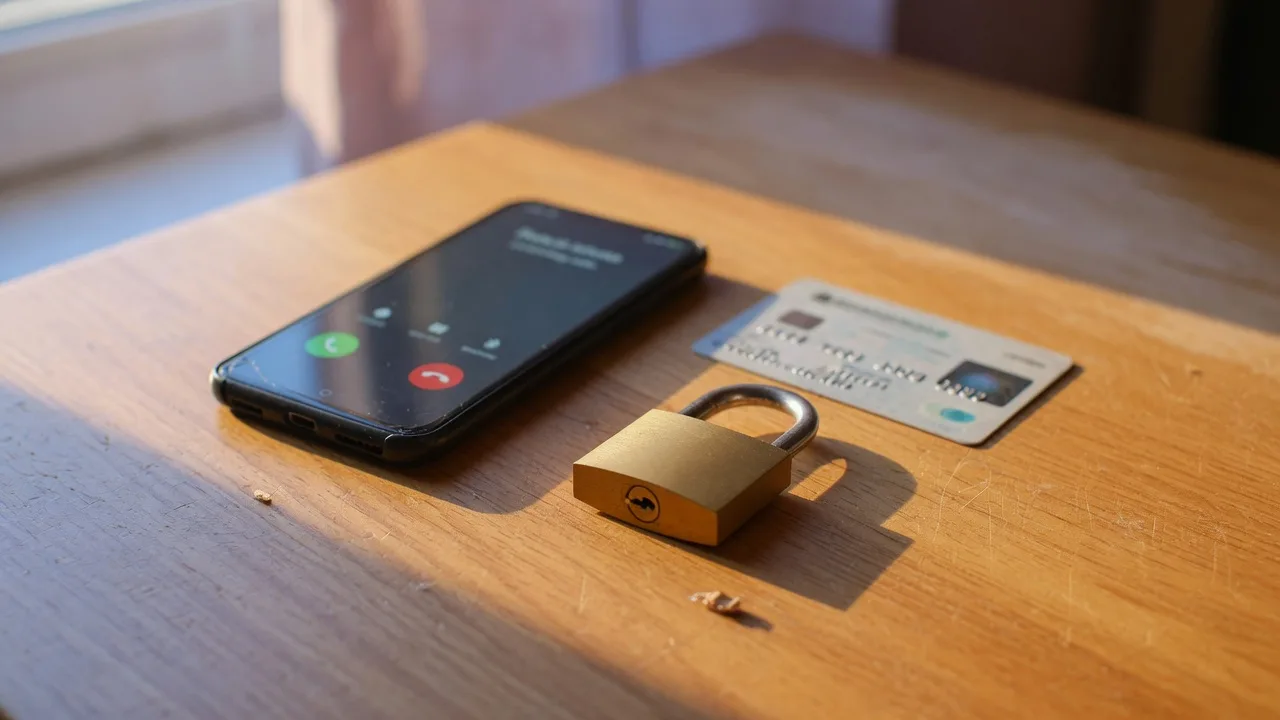
Imagine checking your bank account one morning and discovering that a lifetime of savings is simply gone. That is exactly what happened to an Oakland woman this year, and her story should stop every one of us cold. A recent ABC7 San Francisco Bay Area report told the heartbreaking story of her entire life savings, invested with Charles Schwab, being drained in just minutes. She did not lose it to the market. She lost it to criminals who talked their way into her account over the phone.
NOT AN ISOLATED CASE
This is not a rare, one-off crime. It is happening repeatedly at banks, credit unions, and investment brokerages across the country. The criminals behind these thefts now use advanced technology to convince you there is an urgent problem with your account when there is not one. The call looks real, the voice sounds official, and the panic they create feels justified. That is the trap.
HOW THE SCAM WORKS
Here is the script, and once you recognize it, you will never unsee it. A thief contacts you pretending to be an employee at your bank, credit union, or brokerage. They warn you about a supposed data leak or suspicious activity on your account. They may even describe transactions you never made. Ironically, they are predicting the future, because they are the ones trying to steal your money. The suspicious activity they warn you about is their own.
WHY SO MANY PEOPLE FALL FOR IT
Understanding why this works is the best defense, because the scam is engineered around trust and fear:
Sophisticated Caller ID Spoofing
The incoming call or text displays the actual name and phone number of your financial institution, like Charles Schwab, Vanguard, Capital One, or your local credit union. Caller ID used to be a reliable way to know who was calling. Criminals have turned it into a costume.
Prior Breached Data
Because of past major data leaks at credit bureaus and large companies, criminals often already know your name, your address, and where you hold accounts. They are not guessing. They have done their homework, and they use what they know to sound legitimate.
Manufactured Urgency
They are practiced at creating intense panic. Your money is at risk right now, they tell you, and you must act immediately to secure it. That urgency is the tell. Legitimate institutions give you time. Thieves do not, because time is the one thing that would expose them.
The Two-Factor Authentication Trap
This is the moment the crime happens. The scammer says they are sending a verification code to your phone and asks you to read it back. That text is actually a real two-factor authentication code generated by the scammer trying to log into your account. Once you give them that code, they gain total control and can sweep your accounts clean before you realize what happened.
THE ONE RULE THAT PROTECTS YOU
Here is the one rule that protects you, and it is simple enough to teach anyone: never share a verification code with anyone who calls you. No legitimate bank, credit union, or brokerage will ever call and ask you to read back a code. If someone does, hang up immediately. Then call the number on the back of your card, or open your official banking app, and check your account yourself.
MORE WAYS TO STAY SAFE
Beyond that one rule, a few habits make you nearly impossible to scam:
- Never trust caller ID alone. It can be faked in seconds.
- If anyone pressures you to act instantly, slow down and hang up. Real emergencies do not need you to panic.
- Always verify by calling the official number on your card or statement, never the number the caller gives you.
- Never move money to a safe account a caller tells you about. There is no such thing. That account belongs to the thief.
- Turn on account alerts so you see activity right away. The sooner you spot something wrong, the sooner you can stop it.
THE BOTTOM LINE
Protecting your money is a lot like protecting your home. A little vigilance goes a long way: a locked door, a quick check of the lock, a moment of pause before letting someone in. The same is true for your accounts. If you or an older family member ever gets a call like this, slow down, hang up, and verify through official channels. And if you ever need help navigating a financial decision, or a real estate decision that touches your family's security, I am here to help. Experience matters. Who you hire matters.